📄 Digital book in PDF · read it on your phone or print it
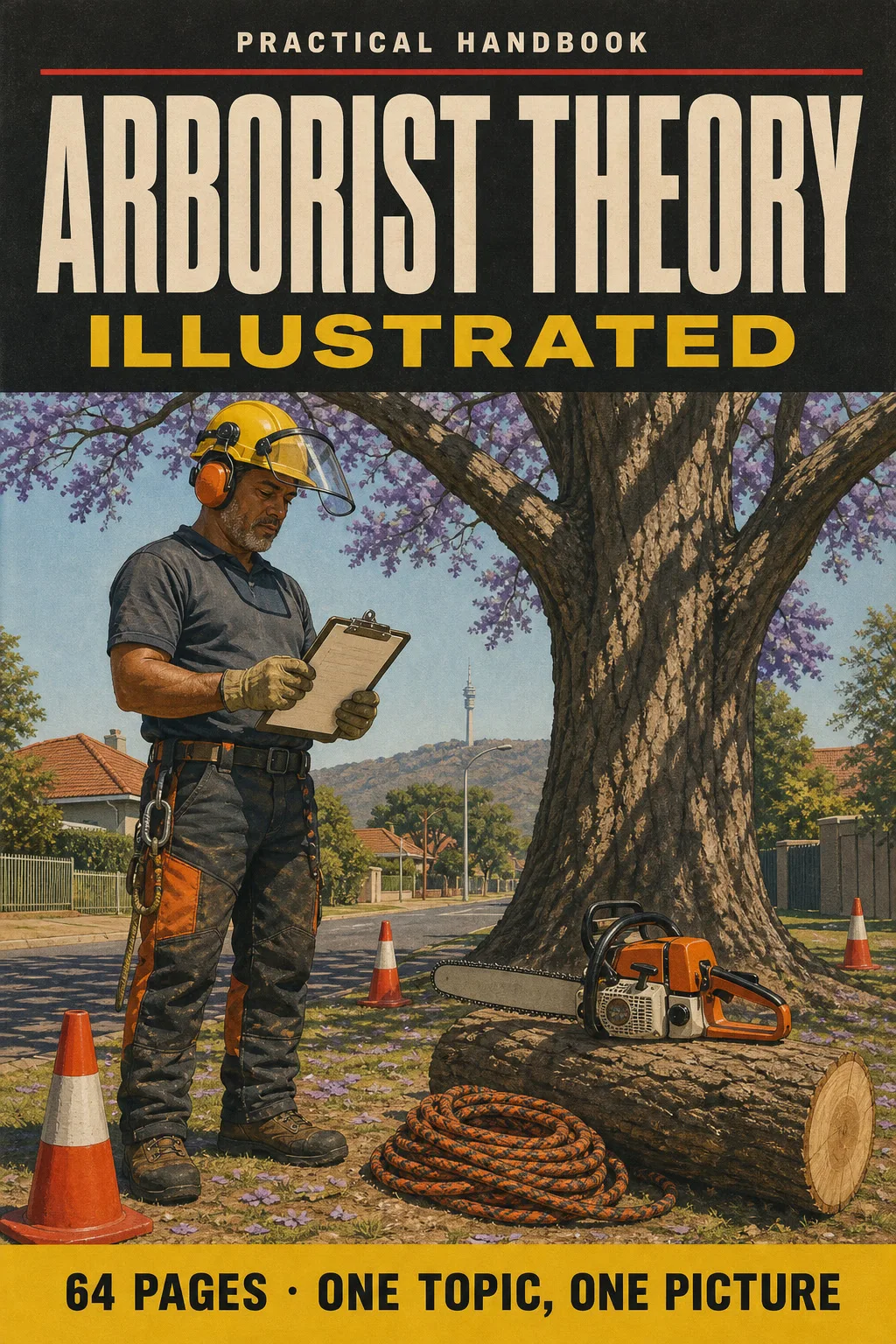
Arborist Theory Illustrated, for garden services, tree fellers and parks teams in South Africa: the branch collar, the three-cut method, crown thinning and reduction, why topping fails, included bark, decay fungi, power lines and the felling hinge. One topic per page: the drawing first, then what you need to remember. 64 illustrated pages.
🔒 Secure checkout · PDF by email · 30-day guarantee
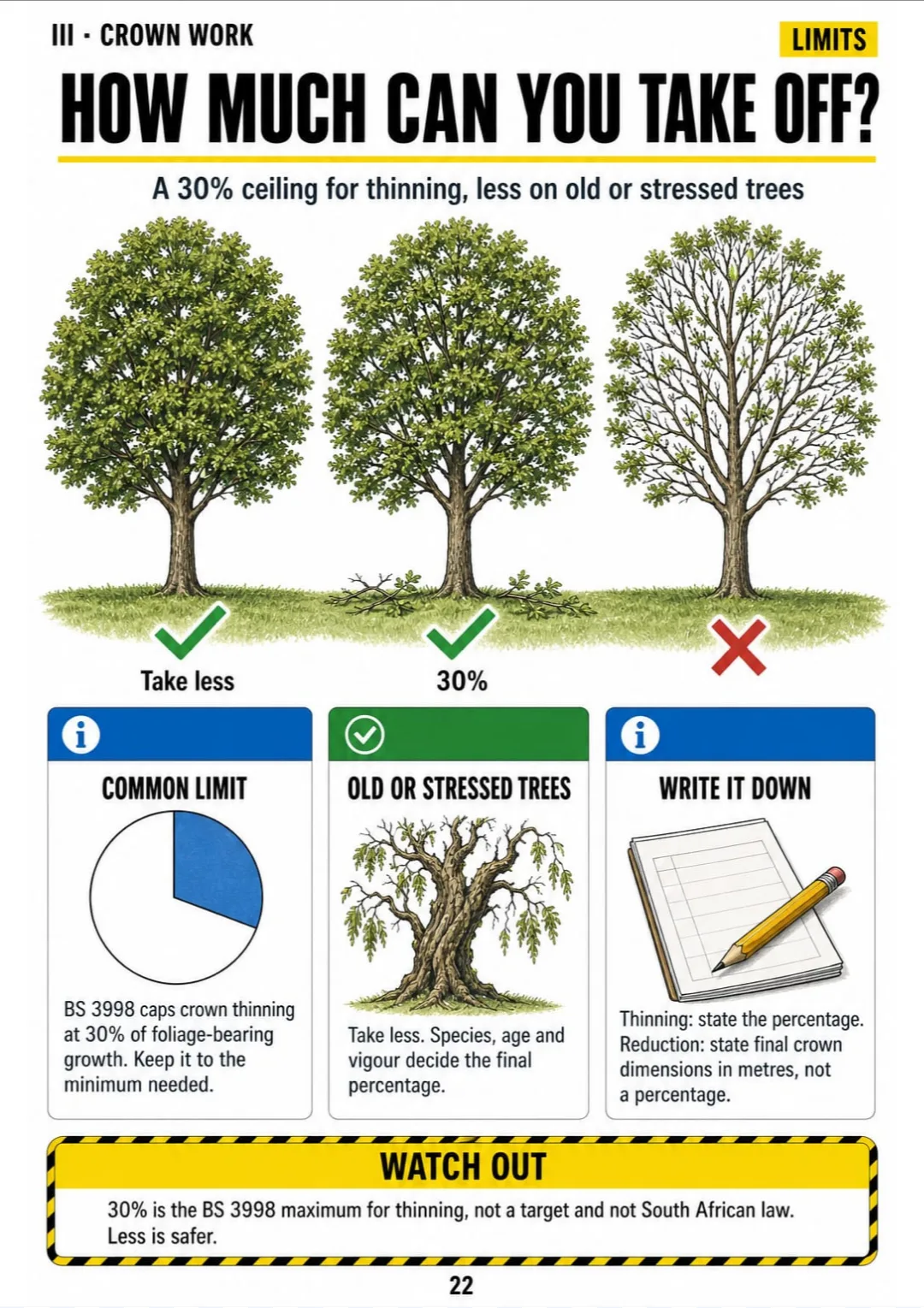
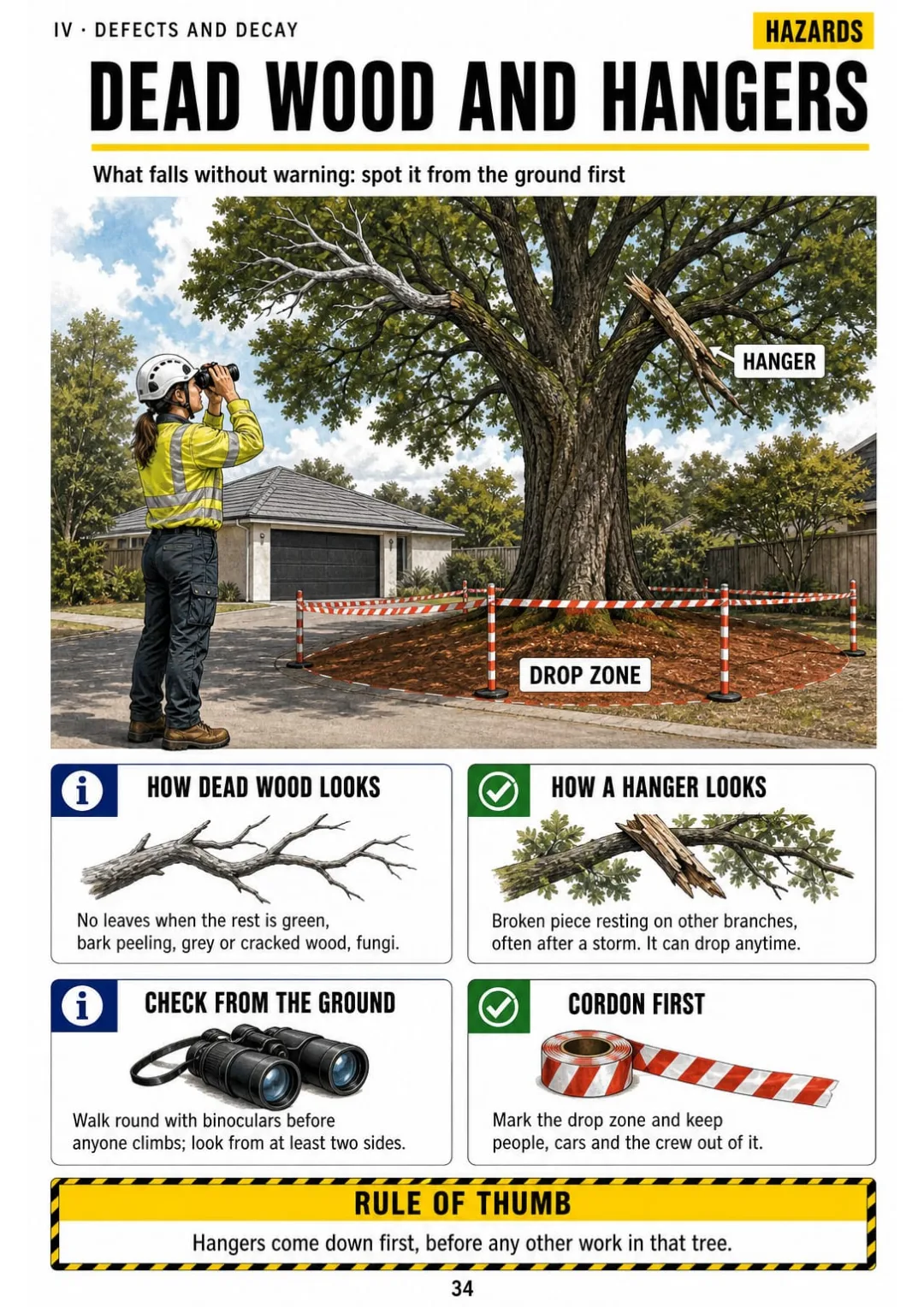
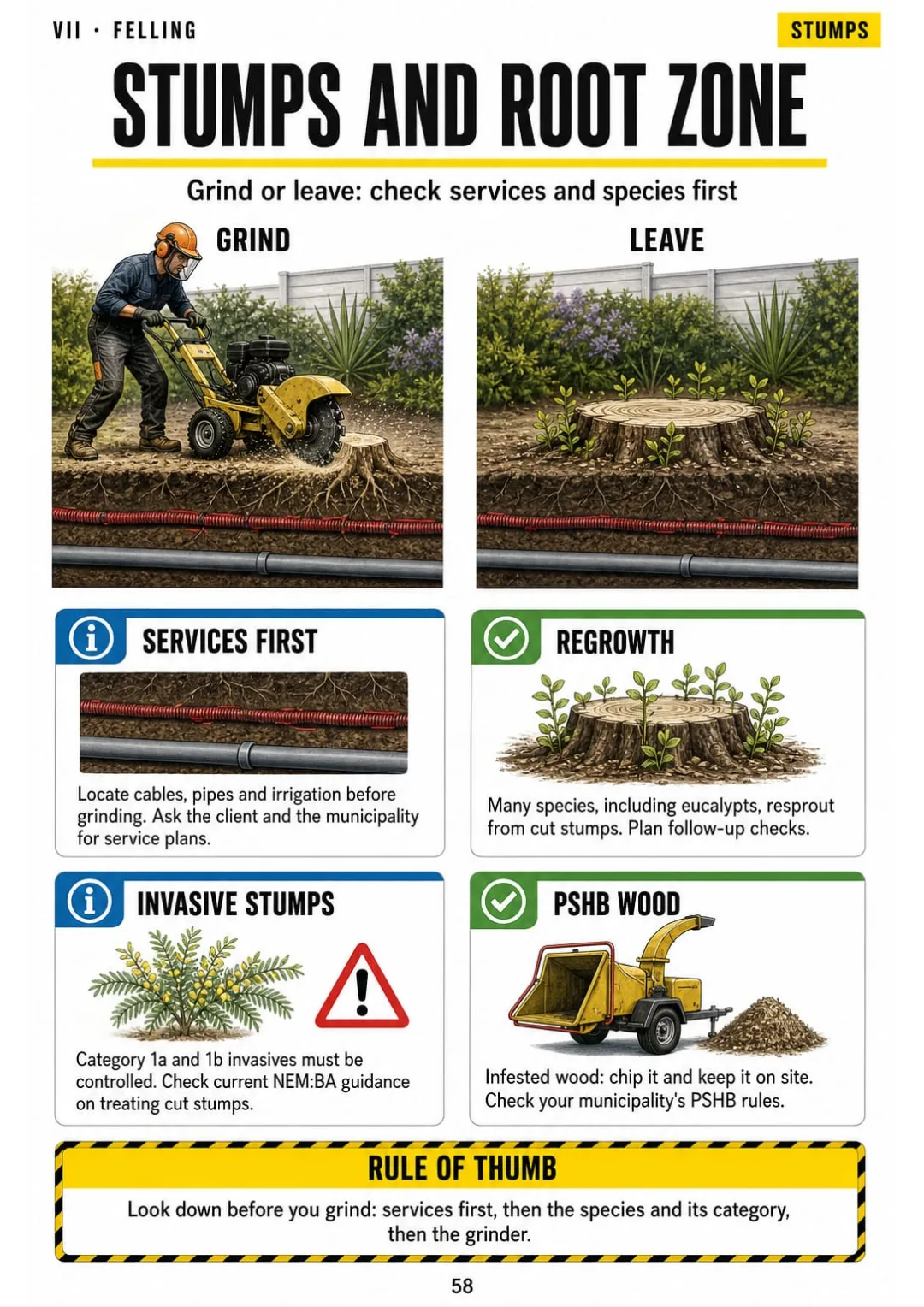
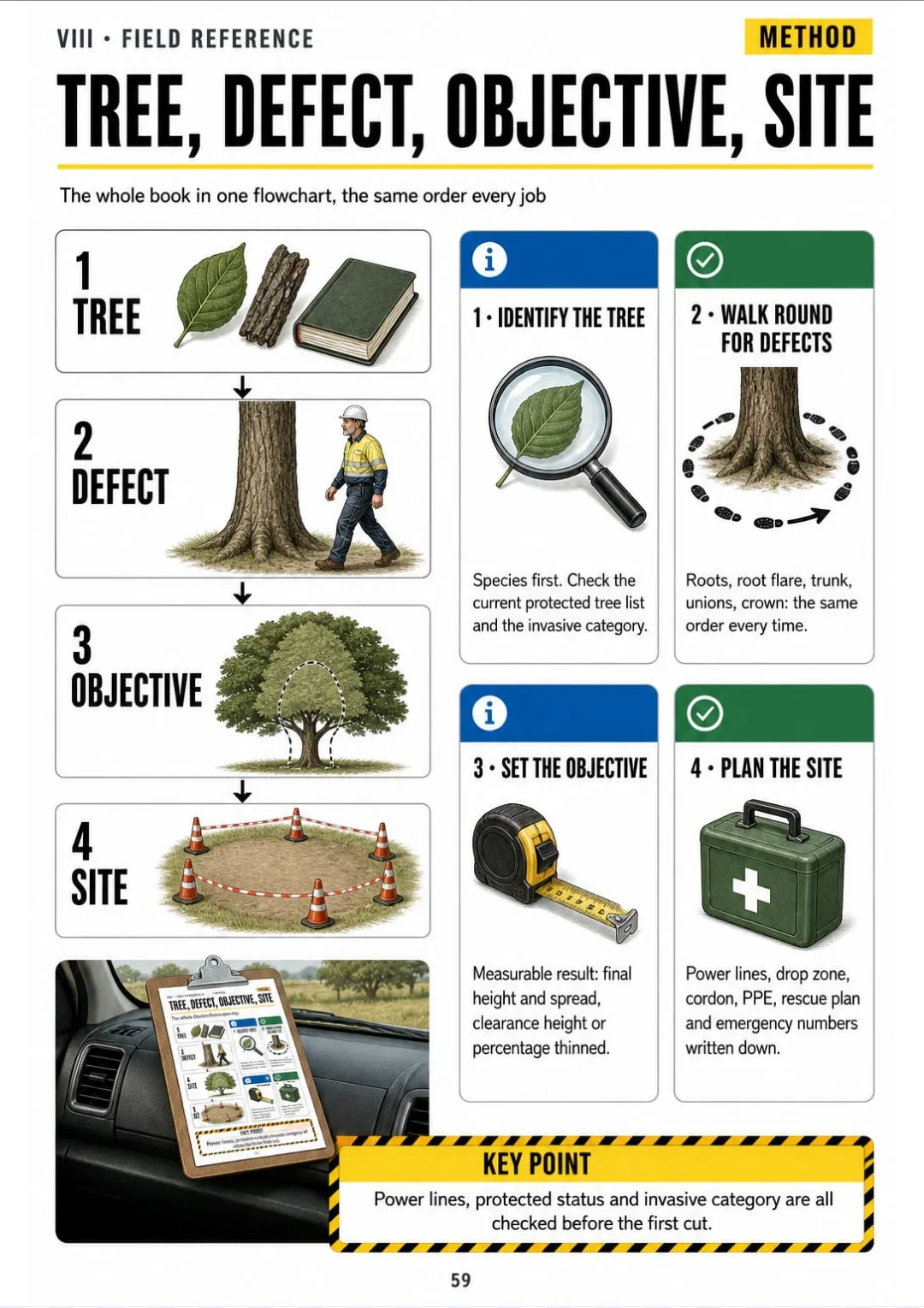
Every page has one big drawing and a box with the cuts, distances and steps you need to know:


Swipe to see more →
These are real pages from the book. The table of contents is the full one: 8 parts and 60 topics.
You're standing under a heavy limb in a client's garden, saw in hand, and it has to come off without the bark tearing down the trunk.
The manual covers it in two dense paragraphs: undercut, top cut, final cut, distances buried in the text. On site, with the team waiting, paragraphs don't show you where each cut goes.

In the book, the three-cut method is one page: the limb drawn, the undercut at about 30 cm from the trunk, the top cut further out, the weight dropping clean and the final cut at the collar. Three numbered cuts, in the order you make them.
Same with the branch collar, the flush cut, how much of a crown you can take off, the V-union and the felling hinge: each one has its own page.
You look at the drawing, you see why each cut sits where it does, and you make it on the next job without going back to the manual.

How a tree works, the pruning cut, crown work, defects and decay, planting and young trees, safe site planning, felling and dismantling, and a field reference: 64 pages, all illustrated.
Think of it this way:
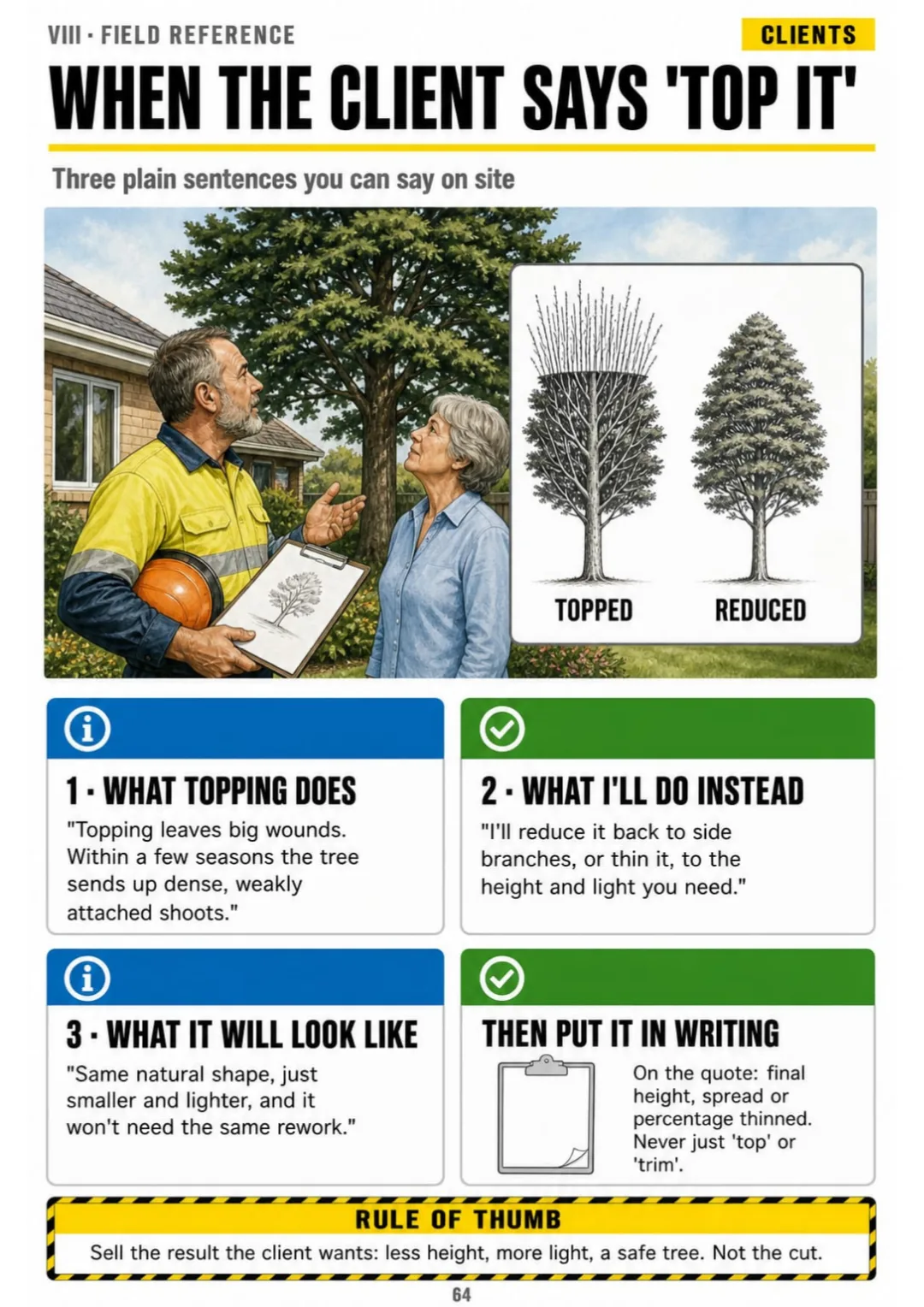
A client points at the big jacaranda and asks you to cut the top off. You know it will grow back worse, but you need to explain why, right there in the garden.
In the book you open the topping page: the tree before and after, the cluster of weak shoots drawn at every cut, and the reduction cut you make instead.

Same with the branch collar, the three-cut method, how much you can take off, the V-union and the hinge: each one on its own page.
Arborist Theory Illustrated is 8 parts and 60 topics, all drawn, with a field reference at the end that puts cuts, crown work, defects and site safety on one page each.
What you see drawn, you don't have to memorize.
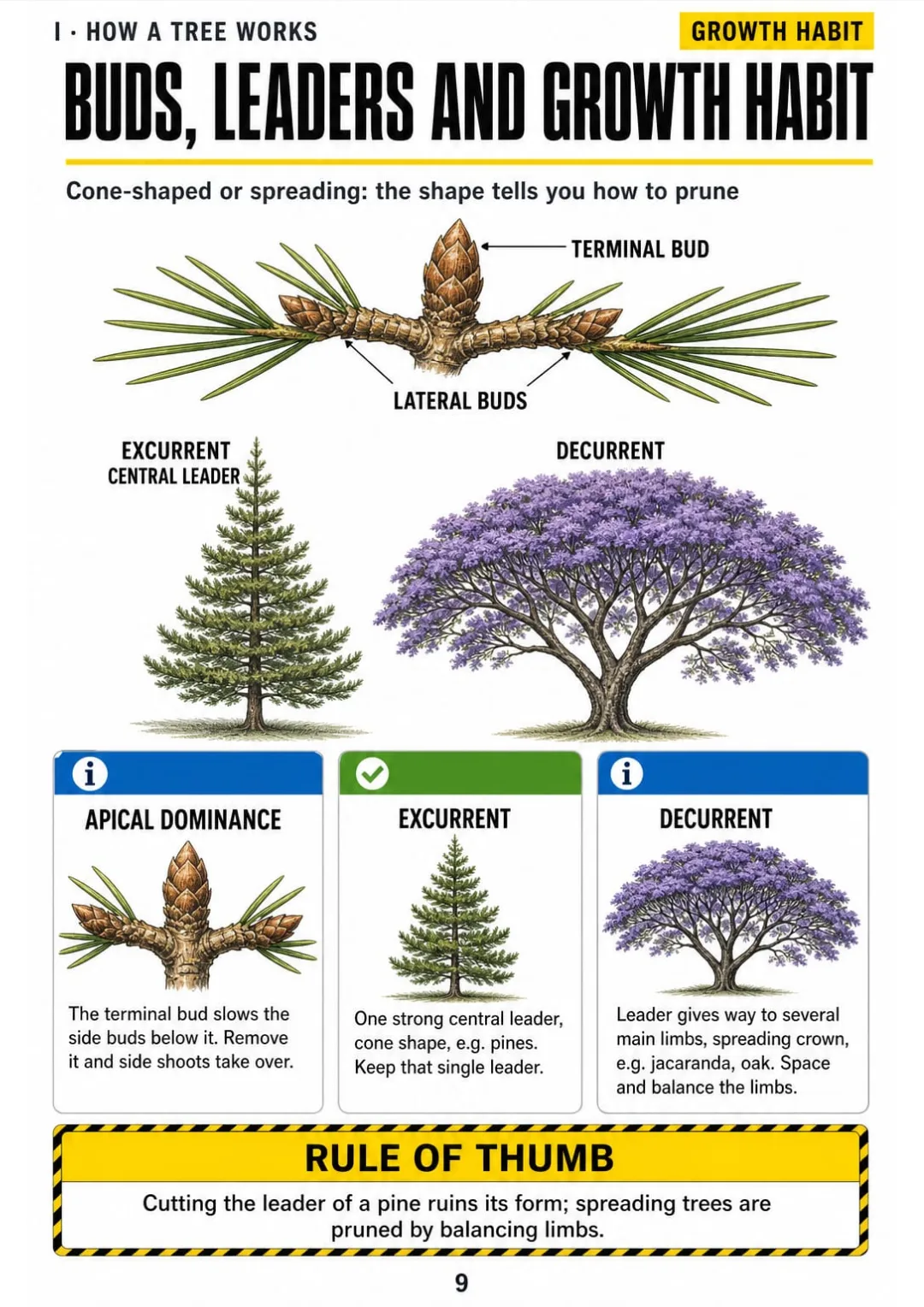
The parts of a tree, bark and cambium, where the roots really are, how a tree feeds itself, buds and leaders, how it seals wounds (CODIT) and the branch collar.
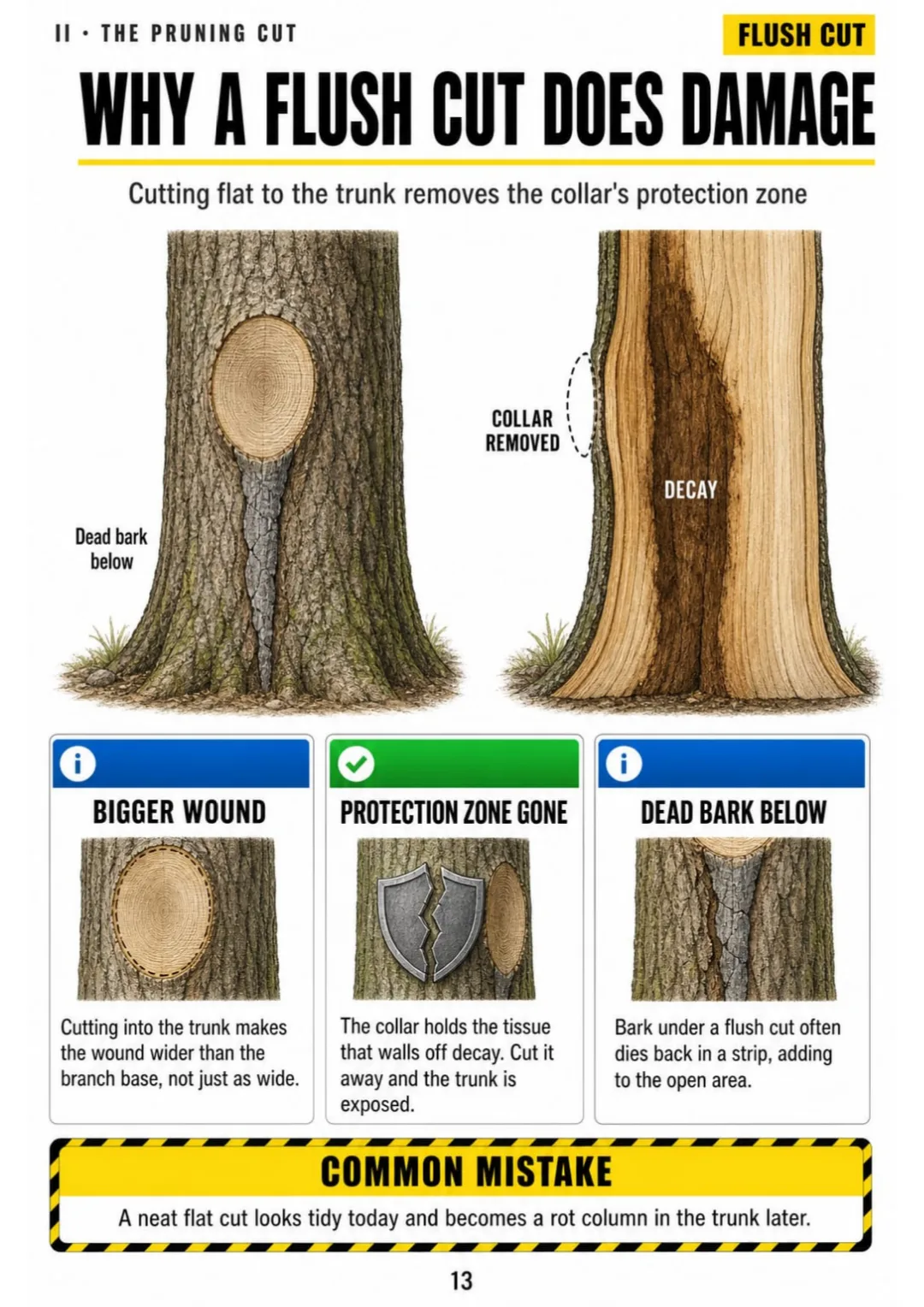
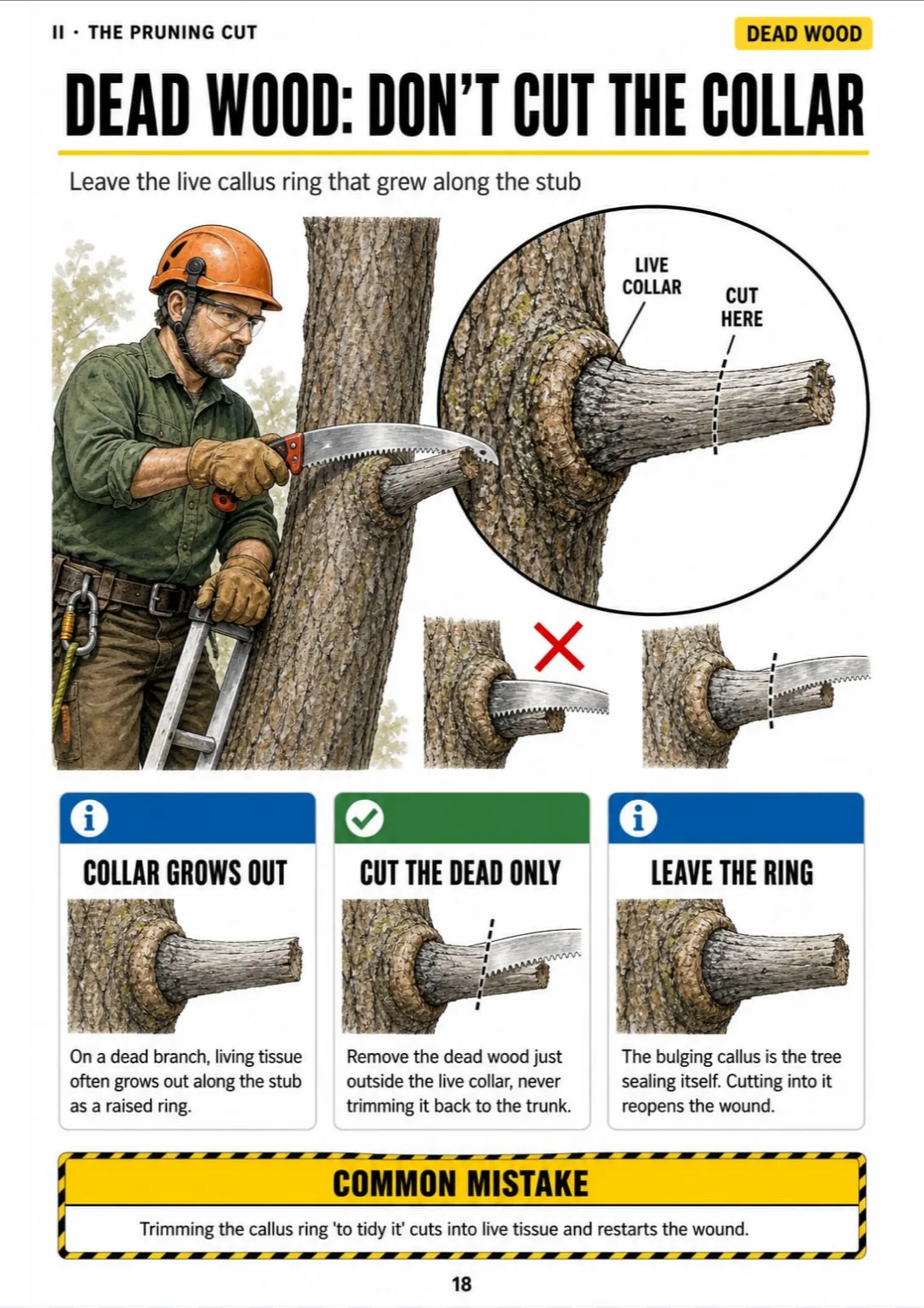
Where the cut goes, why flush cuts and stubs do damage, the three-cut method, codominant stems, reduction cuts, dead wood, wound paint and when to prune in South Africa.
The objective first, how much you can take off, crown cleaning, thinning, raising and reduction, why topping fails and why pollarding is different.
The walk-round from roots to crown, included bark, cracks and splits, fungi, root lift and lean, hangers, target-defect-likelihood, shot hole borer signs and protected or invasive trees.
The right tree for the place, the planting hole, circling roots in nursery bags, staking and ties, mulch and water, and formative pruning.
The employer's duty under the OHS Act, risk assessment, chainsaw PPE, drop zone and cordon, power lines, work at height, small-garden removals, team briefing and the emergency plan.
Reading lean, weight and wind, escape routes, the face cut, the hinge and back cut, sectional dismantling and the stump and root zone.
The 4-step order (tree, defect, objective, site), then cuts, crown work, defects and site safety on one page each, and how to answer a client who wants it topped.
At the end of the book: A field reference section: cuts, crown work, defects and site safety on one page each.
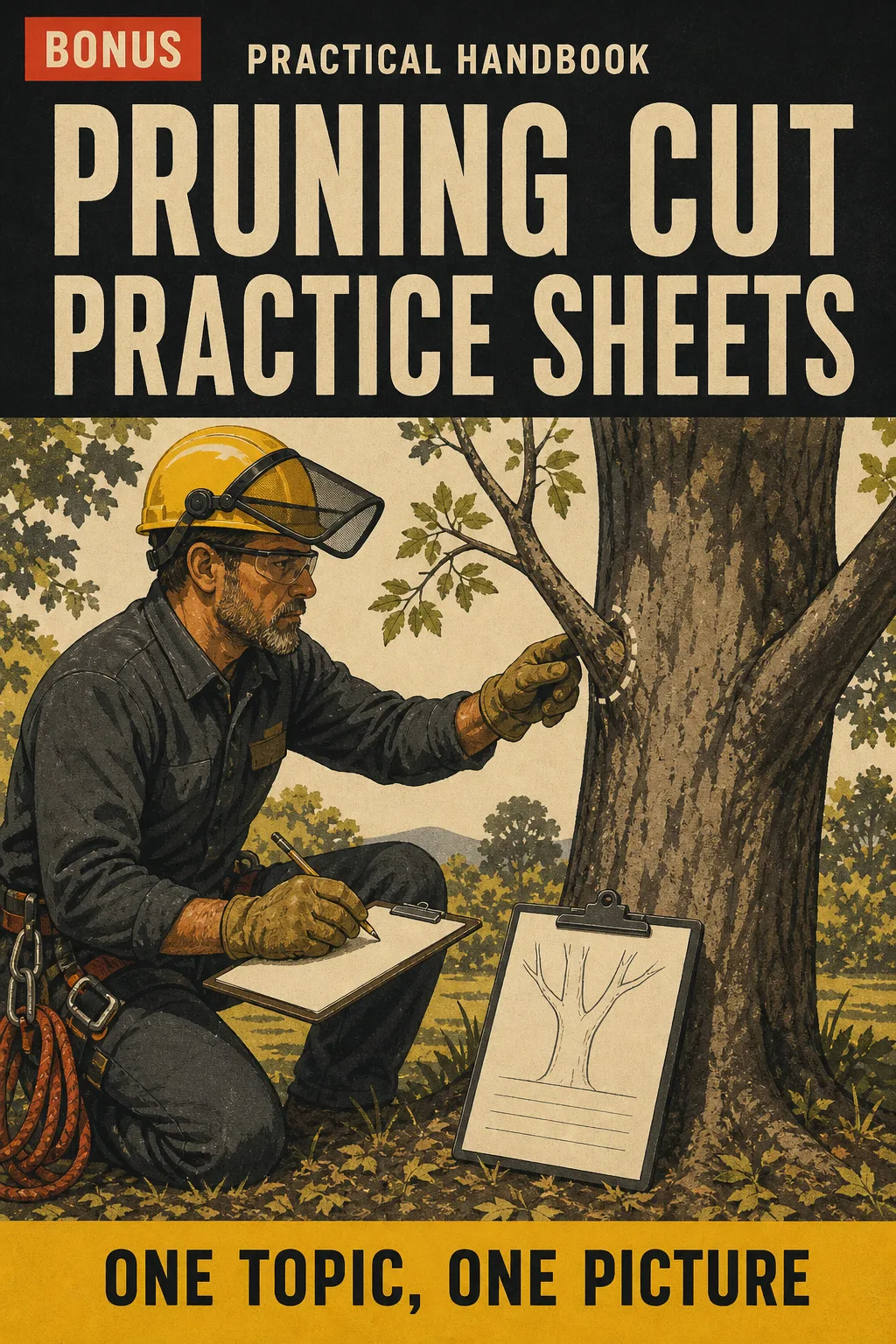
Drawn branches where you mark the right cut yourself, then check it against the answer page, so the branch collar becomes second nature before you climb.

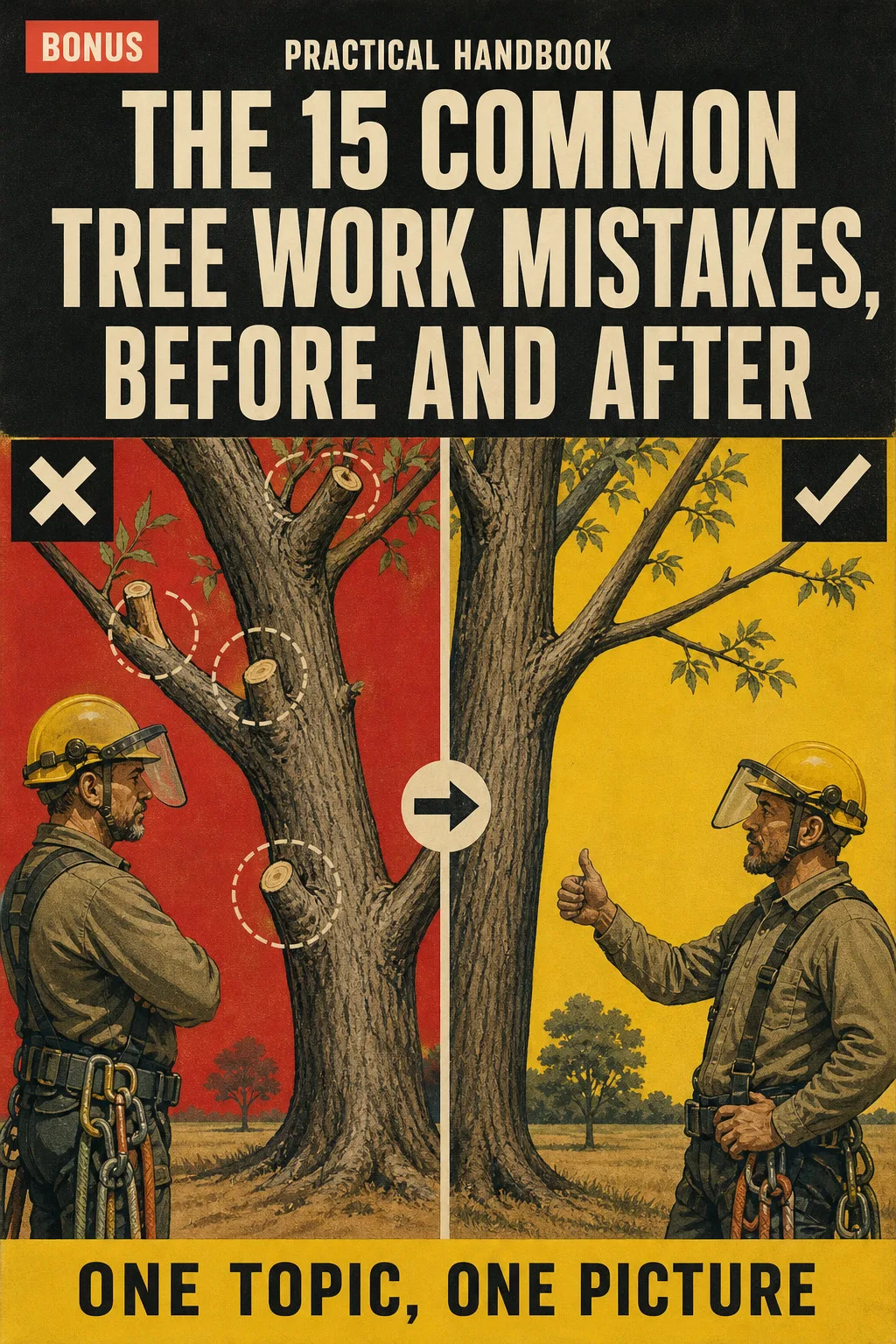
Flush cuts, topping, stubs, volcano mulch, ties left on too long: each mistake drawn next to the right way, so you can spot it on site at a glance.
📄 This is a digital PDF book sent to your email: nothing is printed or shipped.
PDF by email: We email you Arborist Theory Illustrated as a PDF, together with the two free books. It's a single payment: no installments, no extra charges.
Every cut, defect and site rule drawn, so what you covered on the course is still clear when you're back on site.
The walk-round, the defects and the site plan in the same order every time, so you know what you're taking on before you say yes.
The theory behind what your hands already know, with drawings you can show the team and the client to explain each cut.
📄 This is a digital PDF book sent to your email: nothing is printed or shipped.
Try Arborist Theory Illustrated for 30 days, bonus books included.
We refund everything if the file won't open, if the book isn't what you see here, if you were charged twice or if the email doesn't arrive. Just email us.
You pay once. No subscriptions.
Yes. It's written for people who already do the work: garden services, tree fellers and parks teams. Each page shows the why behind what you do, with trees you see here (jacaranda, plane, wild fig, pepper tree), shot hole borer signs, South African rules and metric units. Unlike a video, every cut stays on its page: you open it on site, print it and show it to the client.
From the Occupational Health and Safety Act 85 of 1993 and its regulations, the invasive species lists under the Biodiversity Act and the protected trees list under the National Forests Act. Pruning practice is checked against BS 3998, the British pruning standard widely used as a reference in South African tree work. Where a rule can change, the page tells you so you can check the latest version.
No. It's an independent illustrated book for learning and revising the theory. It doesn't give you a certificate or a qualification, and it isn't issued, approved or endorsed by any government department, standards body, municipality or utility.
No. It's a reference to understand and revise the theory. Chainsaw, climbing and rigging work need practical training, a trained operator and full PPE.
No. The practice sheets and their answer pages are written for this book. They aren't official questions from any course, assessment or exam.
The book and the 2 gifts arrive as a PDF by email, at the address you enter at checkout.
No. It's a one-off payment, with no subscription.
Yes. It's a PDF you can print at home or at a print shop, and keep a copy in the vehicle for site.
You have 30 days. We refund everything if the file won't open, if the book isn't what you see on this page, if you were charged twice or if the email doesn't arrive: just email us.
No more guessing where the first cut goes under a heavy limb.
Where each cut goes is drawn on the page, simple as that.
When a client says 'just top it', you show them the page.
Drawings make studying faster.
The book is right below.
One-time payment: US$ 27 · Guarantee: 30 days · PDF by email
YES, I WANT ARBORIST THEORY ILLUSTRATED FOR US$ 27📄 This is a digital PDF book sent to your email: nothing is printed or shipped.